


Blepharoplasty (Eyelid Surgery)
Blepharoplasty is eyelid surgery that removes or repositions excess skin and fat from the upper eyelids, the lower eyelids, or both. Patients pursue it for two main reasons: heavy upper lids that shrink peripheral vision, and eyes that look tired no matter how much sleep they get.
At I Love LASIK and Lens, we see patients from across NYC, Manhattan, Brooklyn, and the wider New York area. We approach eyelid surgery the way an eye practice does, not the way a cosmetic practice does. Before any incision is planned, Dr. Khosrof looks at where your lid margin sits relative to your pupil. He also checks how your tear film behaves. And he measures how much of your upper visual field the skin is actually taking away.
- What Is Blepharoplasty?
- Why Choose an Eye Doctor for Eyelid Surgery?
- Am I a Good Candidate for Blepharoplasty?
- How Do I Prepare for Blepharoplasty?
- What Happens on the Day of Surgery?
- What Is Recovery Like After Blepharoplasty?
- What Are the Risks of Blepharoplasty?
- Why Should I Choose Dr. Samer Khosrof for Blepharoplasty?
- FAQs About Blepharoplasty
- Schedule Your Blepharoplasty Consultation

What Is Blepharoplasty?
Blepharoplasty treats the soft tissue of the eyelid itself. Over time, eyelid skin loses elasticity, and the thin membrane that holds fat in place around the eye weakens too. Skin drapes downward and fat pushes forward. Patients usually call it hooding.
Why Choose an Eye Doctor for Eyelid Surgery?
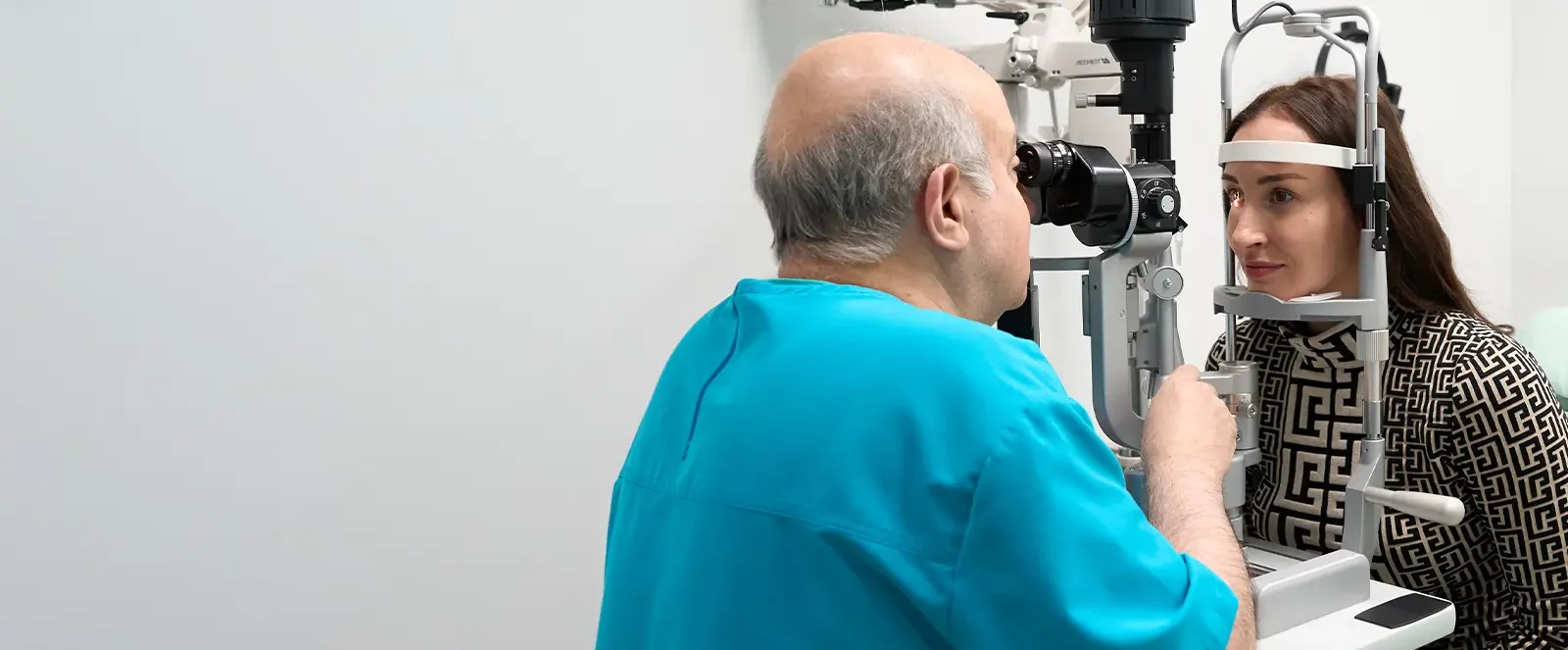
The eyelids sit directly on top of one of the most complex, delicate parts of your body: the eye itself. An eye surgeon brings anatomical knowledge here that a general cosmetic surgeon doesn’t typically train for. That includes the cornea, tear ducts, eye muscles, and the nerves that control your eyelid, all in one small area.
That depth of knowledge matters during surgery, not only before it. An eye surgeon operates with the eye’s full anatomy in mind. That protects your vision and the surface of your eye throughout the procedure.
It also matters for diagnosis. Conditions like dry eye, thyroid eye disease, or true lid drooping, called ptosis, can look like simple hooding. They need a completely different plan, though. Catching that difference is what an eye-focused evaluation is built for.
Am I a Good Candidate for Blepharoplasty?
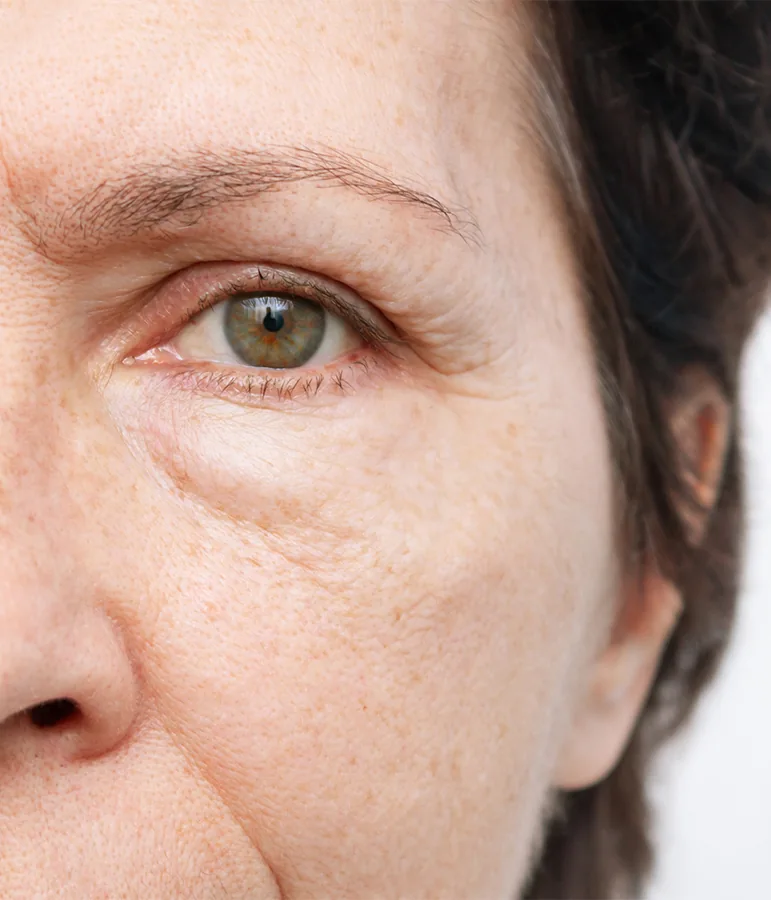
Good candidates are bothered by heaviness, hooding, or under-eye puffiness that does not improve with rest. They are also in reasonable general health. Eyelid structure and skin quality matter considerably more than age.
Some patients have excess skin, some have true lid drooping, and many have both. Dr. Khosrof sorts out which is which at your consultation, since the fix is different for each.
The evaluation also checks for conditions that could change your plan or timing:
- Untreated dry eye
- Thyroid eye disease
- Uncontrolled glaucoma
- An unstable eyeglass prescription
- Recent eye surgery
Dry eye deserves particular attention, since your eyelids are what spread tears across the surface of your eye. A healthy ocular surface makes for a smoother recovery. This is why an ophthalmology practice is a sensible place to have the conversation.
Schedule a Consultation
How Do I Prepare for Blepharoplasty?
Preparation starts at your consultation, where Dr. Khosrof reviews your medications and health history. Blood thinners, certain supplements, and some over-the-counter pain relievers usually need to pause beforehand. They raise the risk of bleeding. You’ll get exact timing for each one.
Arrange a ride home in advance, since you won’t be able to drive yourself after sedation. Plan to take it easy for the first few days. Stock up on ice packs and lubricating eye drops. A few extra pillows help too, to keep your head elevated while you sleep.
If you smoke, stopping beforehand helps healing considerably. Bring a current list of medications and allergies to your pre-operative appointment, and ask about anything that still feels unclear.

What Happens on the Day of Surgery?
Blepharoplasty is done on an outpatient basis, most often under local anesthesia with light sedation. You’re awake, but comfortable, and you go home the same day. Upper eyelid surgery generally takes about an hour; a combined upper and lower procedure usually runs closer to two.
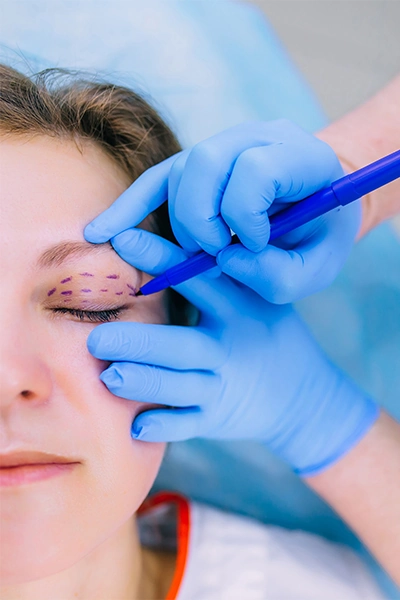
The technique differs by lid. For the upper lid, the incision is placed inside the natural crease. It heals there as a fine line hidden in the fold. Excess skin is removed, and a narrow strip of muscle is sometimes taken with it. Bulging fat is reduced or repositioned. This is the version of the procedure that can widen what you see.
For the lower lid, the approach depends on what’s causing the problem. When it’s mainly bulging fat, the incision goes on the inside of the lid, leaving nothing visible on the skin. When skin also needs tightening, a fine incision is used just beneath the lash line instead. Fat is more often repositioned than removed here. Taking too much can leave a hollow, drawn look that’s hard to undo.

What Is Recovery Like After Blepharoplasty?
Swelling and bruising peak in the first two to three days and then improve steadily. Cold compresses, lubricating drops, and head elevation do most of the work early on. Upper lid sutures typically come out around five to seven days.
Most patients are comfortable in public somewhere between seven and ten days. Makeup, though, usually waits until roughly two weeks. Vision can be blurry for a day or two from ointment and swelling. Arrange a ride home, and plan not to drive. Strenuous exercise waits several weeks, and the final contour keeps refining for a few months as the incision matures.
It helps to set expectations clearly. A patient satisfaction study found that people report high satisfaction after upper eyelid surgery. That holds true no matter how mild or severe the hooding looked beforehand. If your hooding is mild, that’s still a legitimate reason to have the conversation. You don’t need to wait until it feels more severe.
What Are the Risks of Blepharoplasty?
Blepharoplasty is well established as a functional procedure, not only a cosmetic one. Research on functional eyelid surgery has found real improvement in vision, peripheral vision, and quality of life. That holds for the right candidates. Serious complications are uncommon, but they are not zero.
Expected effects include swelling, bruising, temporary dryness or grittiness, and asymmetry between the two sides during healing. Less common issues include incomplete lid closure, a change in lower lid position, or prolonged dry eye. A result that removes too much tissue can also read as hollow. Bleeding behind the eye is rare. It is the reason blood thinners and certain supplements are reviewed carefully in advance. Each of these is discussed at consultation before you decide.
Why Should I Choose Dr. Samer Khosrof for Blepharoplasty?
Dr. Samer Khosrof evaluates and performs every blepharoplasty himself, from your first consultation through your final follow-up. He doesn’t hand off the surgical portion to another provider.
His training is in the eye itself, not only the skin around it. He completed his ophthalmology training, then two fellowships in vitreoretinal surgery. Day to day, he manages conditions like dry eye, glaucoma, and retinal disease. Those are the same conditions that can complicate eyelid surgery or quietly change the plan. That means he catches problems before they become surprises in the operating room. Few surgeons combine that depth of eye-disease knowledge with surgical skill in the same pair of hands.
At your consultation, Dr. Khosrof examines your whole eye, not only your eyelid, before recommending anything.
FAQs About Blepharoplasty
Sometimes, and it depends on your plan. Upper eyelid surgery is more likely to be covered when the excess skin has reduced your vision enough. That makes it a functional problem, not a purely cosmetic one. That usually means documentation such as photos and a vision test. It’s done both with your lids resting naturally, and with the skin lifted out of the way. Lower eyelid surgery is treated differently by most insurers and is rarely covered, since it’s usually considered cosmetic. Your consultation will include a clear read on where you stand and what your plan may require.
Upper eyelid surgery generally takes about an hour, and a combined upper and lower procedure usually runs closer to two. It is an outpatient procedure, so you go home the same day.
Upper eyelid results commonly last a decade or more. Lower eyelid results tend to last longer still, since repositioned fat does not typically return. Aging continues either way, so the lids keep changing slowly.
No. Blepharoplasty addresses excess skin and fat, not the fine expression lines at the outer corner of the eye. Those respond to different treatments, which is worth a separate conversation at your visit.
Most patients are cleared for contact lenses about two weeks after surgery. It depends on how the ocular surface looks at your follow-up visit. Glasses are fine as soon as swelling allows.
There is no upper limit. Candidacy depends on eyelid anatomy, eye health, and general medical fitness rather than a birth year. Patients with strong family patterns of heavy lids sometimes have surgery in their thirties.

Schedule Your Blepharoplasty Consultation
Heavy lids can narrow what you see. Eyes can look tired in a way that rest does not fix. Either way, the next step is a consultation with Dr. Khosrof. You will get a full eye examination, measurements of your lid position, and an assessment of your tear film. You will also get a straight answer about whether surgery is the right move.
We see blepharoplasty patients from across NYC, Manhattan, Brooklyn, and the wider New York area, with offices in Manhattan and Brooklyn.